How Tree Removal Metairie Experts Prevent Property Damage
Property damage from failing trees rarely starts with a dramatic crack and a trunk crashing onto a roof. More often, it begins quietly. A root system shifts after a week of heavy rain. A cavity inside the trunk spreads farther than anyone can see from the driveway. Limbs overhang a garage for years, until one Gulf Coast storm turns a manageable risk into a five-figure repair.
That is why skilled tree crews matter so much in southeast Louisiana. In Metairie, trees grow fast, storms hit hard, and many residential lots leave very little margin for error. A live oak that might be an asset in one setting can become a liability when it leans toward a fence line, a power drop, a pool screen, or a slab foundation. The work is not just about cutting a tree down. It is about controlling force, weight, direction, timing, and debris in a way that protects everything around it.
Experienced professionals in tree removal Metairie work with that reality every day. They know that a safe removal is built long before the first saw starts. It begins with reading the tree, reading the site, and understanding what can go wrong if the job is rushed or oversimplified.
Why trees become a threat to property in Metairie
Metairie has a mix of mature neighborhoods, tight property lines, and weather patterns that can be rough on trees. That combination creates risk in ways homeowners sometimes underestimate.
The first issue is space. Many homes have additions, carports, detached sheds, patios, brick walkways, and overhead service lines packed into relatively compact lots. A tree does not need to be enormous to threaten something valuable. Even a mid-sized trunk can weigh far more than most people imagine, especially once the wood is saturated. A falling limb that looks manageable from the ground can crush gutters, crack rafters, or punch through a vehicle roof.
The second issue is water. Louisiana soils expand and shift, and prolonged wet periods can weaken root anchorage. Then comes the other side of the cycle, dry stretches that stress the tree and make limbs more brittle. Add fungal decay, insect activity, and old storm damage, and a tree that looked solid a year ago may now have a compromised structure.
The third issue is species behavior. Some trees tolerate local conditions well. Others grow quickly, develop weak branch unions, or struggle once construction has disturbed their root zones. Homeowners often notice obvious signs like dead limbs, but structural defects are less visible. Codominant stems, included bark, trunk cavities, root flare issues, and hidden decay can all raise the chance of failure.
Professionals who specialize in tree removal Metairie do not treat every hazardous tree the same way. They evaluate the tree as a living structure, shaped by local weather, soil, and surrounding construction. That judgment is what separates a damage-prevention approach from a basic cut-and-haul service.
The inspection is where damage prevention really starts
One of the biggest misconceptions about tree removal is that the hard part begins when the climbing gear comes out. In practice, the most important work often happens during the inspection.
A qualified crew looks at the obvious targets first, the house, vehicles, fences, detached structures, utility lines, and neighboring property. Then they move to the tree itself. Is the lean natural and stable, or recent and concerning? Does the crown show dieback? Are there mushrooms at the base, cracks in the trunk, or signs that roots have lifted the surrounding soil? Has the tree been topped in the past, creating weak regrowth? Is there storm damage higher in the canopy that the homeowner cannot see from the yard?
Site conditions matter just as much. A backyard with open lawn gives a crew options. A narrow side yard with ornamental plantings, a pool pump, and a low-hanging power service line does not. If the ground is soft, equipment access changes. If a fence gate is too narrow for machinery, removal strategy changes again. If there is a neighboring roof just beyond the property line, rigging has to be far more controlled.
I have seen jobs where the tree itself was only moderately difficult, but the site made it a precision operation. One common example is a large limb extending over a sunroom. From the street, the tree looks straightforward. Up close, the crew finds a rotten union near the main stem and no safe drop zone below. That is not a cut-and-hope situation. It calls for sectional dismantling, rope rigging, and patient lowering of every heavy piece.
Controlled dismantling protects roofs, driveways, and landscaping
When people picture tree removal, they often imagine a trunk being felled in one motion. That works only when there is adequate open space and the tree is structurally predictable. In many Metairie neighborhoods, neither condition is present.
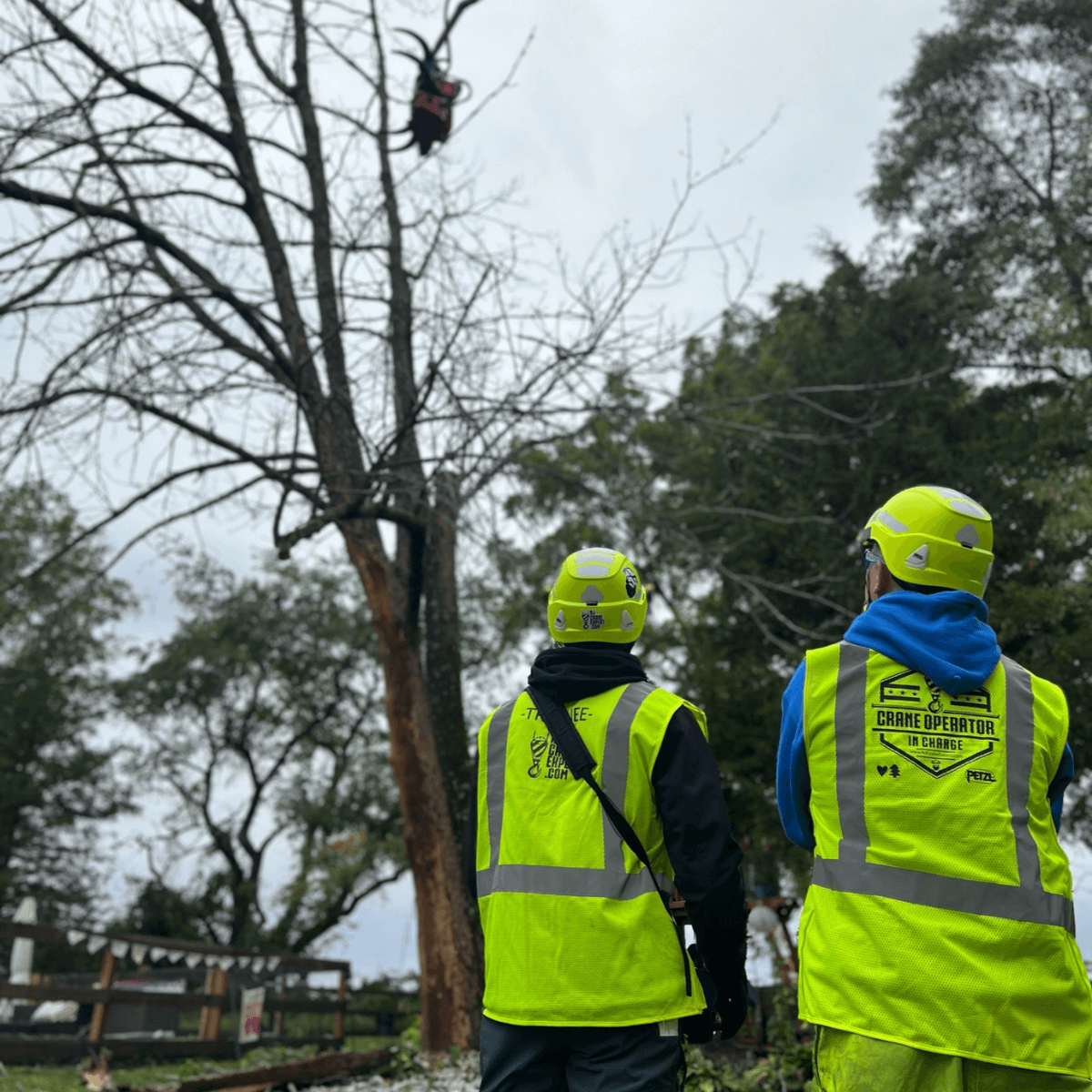
Instead, experts remove trees in sections. They may climb the tree, use an aerial lift when access allows, or combine both methods depending on the shape and condition of the canopy. Limbs are cut in manageable pieces and lowered with ropes, friction devices, and rigging points chosen to direct weight away from vulnerable structures.
This is where experience shows. A limb does not simply go where gravity suggests. It swings. It twists. It can shock-load a rigging line if the cut piece is too heavy or if the angle is wrong. A seasoned crew calculates those variables in real time. They choose cut sizes that match the wood condition, the rigging setup, and the landing area. They know when to negative rig a piece straight down and when to guide it laterally away from a roof edge or ornamental wall.
Driveways present another challenge. Concrete can crack under heavy impact, especially when large rounds from the trunk are dropped carelessly. Good crews use padding, plywood protection, or crane-assisted lifts when needed. The same thinking applies to irrigation lines, garden beds, and paver walkways. The goal is not merely to get the tree on the ground. The goal is to leave the site intact.
Preventing damage to foundations and underground systems
Not all property damage happens above ground. Roots can be just as important as limbs, especially near older homes. Large trees planted too close to slabs, driveways, or buried plumbing can contribute to long-term structural stress. Yet root-related decisions require restraint. Not every crack in a driveway is caused by a tree, and not every tree near a house should be removed.
This is where a professional assessment matters. Crews with real field experience understand the trade-offs. Removing a tree may solve one problem while creating another if the site is not managed correctly. Once a large tree is gone, soil moisture patterns can shift. Stump grinding changes the immediate area again. If utility lines, drainage components, or shallow pipes are nearby, that work needs to be planned carefully.
On the removal side, experts minimize collateral damage by controlling where equipment travels and how the stump area is handled. Heavy machines can rut lawns, break edging, or compact root zones of nearby healthy trees. In tighter spaces, hand-carried debris and smaller specialty equipment may be slower, but they reduce the chance of avoidable damage. That kind of judgment often saves money for the homeowner, even if the removal itself takes longer.
Storm preparation is a form of damage prevention
In this region, many emergency removals could have been avoided with earlier intervention. A tree does not need to be dead to be dangerous in high wind. It only needs a weak point and the right storm conditions.
Metairie crews often identify patterns that homeowners miss. A branch with a tight V-shaped union may hold for years, then split during a summer thunderstorm. A tree with one-sided canopy growth may become unstable after repeated pruning on the opposite side. A root plate that has been compromised by trenching or driveway expansion may not fail until the ground is soaked and gusts begin.
Preventive removal is sometimes the most responsible choice, especially when the tree is already declining and positioned over a home or access route. Waiting for visible collapse can turn a controlled job into an emergency response, and emergency work is almost always more expensive, more disruptive, and more dangerous.
That said, good professionals do not recommend removal casually. They look at whether pruning, cabling, or monitoring could address the risk. Property protection is not served by unnecessary cutting. The value lies in sound judgment, not aggressive sales pressure.
Utility awareness is non-negotiable
One of the fastest ways to turn a difficult tree job into a disaster is to underestimate nearby utilities. Overhead service lines, communication cables, transformers, buried gas lines, and water mains all change how a removal should be performed.
Around homes, service drops are especially common trouble spots. A branch brushing a line may seem harmless until it is cut and shifts weight unexpectedly. Electricity does not allow for guesswork. If energized conductors are involved, the job may require utility coordination or a line-clearance specialist. Reputable crews know where their scope ends and when another party must be involved before work proceeds.
Below ground, stump grinding can also create issues if the site is not marked and understood. Grinding too aggressively near shallow utilities can lead to damage that is costly and dangerous. Crews who protect property do not rely on assumptions about what is buried where. They verify access, mark work zones, and adjust their approach.
Insurance, liability, and why professionalism matters
Property owners often focus on the visible side of tree work, chainsaws, ropes, chip trucks. Less visible, but equally important, is the business side of the operation. Insurance coverage, worker training, equipment maintenance, and documented procedures all affect whether property is truly protected.
If a crew damages a roof, fence, or neighboring structure, proper insurance matters. If an uninsured worker gets injured on site, that can create serious exposure for the homeowner. Professional companies tend to be more disciplined before, during, and after the cut because they understand risk from every angle.
That professionalism shows up in smaller ways too. The crew protects surfaces before dragging brush. They communicate with neighbors if access is tight. They stop when weather conditions become unsafe. They clean up methodically rather than leaving trip hazards and wood debris scattered across the lot. Those details may seem minor until the alternative is a dented gate, torn sod, or a dispute over who is responsible for damage along the property line.
Equipment choice can make or break the job
A surprising amount of property protection comes down to using the right equipment for the site. Bigger is not always better.
A large bucket truck can speed up removals on open lots with good access, but it may be a poor fit for narrow residential spaces. Heavy outriggers can crack old pavement if not managed carefully. On the other hand, a compact tracked lift might reach a backyard through a gate and spread weight more evenly over soft ground. In some situations, old-fashioned climbing is the least disruptive option.
Cranes are another example. Some homeowners hear “crane removal” and assume it is excessive. In reality, a crane can be the safest, least damaging choice when a large tree overhangs a house and there is room to stage the lift. Instead of piecing heavy sections out over the roof, the crew can secure them, lift them cleanly, and place them where they can be processed safely. The setup cost may be higher, but the reduction in risk often justifies it.
When evaluating tree removal Metairie providers, homeowners should pay attention to how the company talks about access and equipment. If the plan sounds generic, that is a warning sign. A thoughtful crew explains not just what they will remove, but how they will protect the driveway, lawn, hardscape, and nearby structures while doing it.
Signs a tree may be putting property at risk
Some warning signs are obvious, others are easy to overlook. Homeowners do not need to diagnose the tree themselves, but they should know when to call for an assessment.
- New lean, especially after heavy rain or wind
- Large dead limbs over roofs, cars, or walkways
- Cracks in the trunk or major branch unions
- Mushrooms or decay near the base
- Soil lifting or root exposure around the trunk
Any one of these does not automatically mean immediate removal. Together, or in a storm-prone setting, they deserve prompt attention.
The neighborhood factor homeowners often forget
Property damage risk is not limited to your own lot. In Metairie, houses are often close together. A tree may threaten a neighbor’s fence, shed, or roof as much as your own. That affects planning, communication, and liability.
Experienced crews account for neighboring structures from the start. They consider where brush may swing, where chips may travel, and how vehicles and equipment may need to be staged without blocking access or causing friction. On narrow streets, that may require temporary traffic control or careful scheduling. In backyards with shared fence lines, it may require lowering even small pieces instead of free-dropping them.
There is also a practical side to timing. If a compromised tree sits between two homes, waiting until after a storm warning is issued can make removal harder to schedule and riskier to perform. The best window for property protection is usually before the forecast turns urgent.
What a careful removal plan usually includes
A homeowner does not need to know every technical detail, but a solid work plan should be clear, site-specific, and safety-driven.
- Assessment of the tree’s condition and likely failure points
- Identification of targets such as roofs, fences, vehicles, and utilities
- Removal method suited to the site, such as sectional dismantling, lift access, or crane work
- Surface and landscape protection for driveways, lawns, and planting beds
- Cleanup, debris hauling, and stump strategy
If a company cannot explain these points in plain language, it is worth asking more questions before the work begins.
Cleanup is part of protecting the property
Cleanup sounds like an afterthought until it is done poorly. Dragging brush across siding can scratch paint. Rolling trunk rounds over pavers can chip edges. Leaving sawdust piles on wet turf can smother grass. Even wood chips from a chipper can scar nearby windows or vehicles if the discharge direction is not managed.
The better crews treat cleanup as part of the job, not the final scramble after the “real work” is over. They establish debris flow before cutting starts. They decide where logs will be staged, how brush will move, and which surfaces need protection. On delicate sites, they may carry smaller material by hand rather than dragging it. They rake thoroughly, blow off hard surfaces, and check for stray hanging limbs or partially cut stubs that could become hazards later.
This matters for liability as much as appearance. Many post-job complaints come from secondary damage, a gate left off its hinges, a sprinkler head snapped during hauling, a hidden divot tree removal metairie in the lawn that becomes a trip hazard. Professionalism shows in those final details.
Why cheap tree removal often ends up expensive
Every market has operators who bid low by skipping planning, insurance, proper rigging, or skilled labor. On simple jobs in open areas, they may get away with it. In a dense residential setting, the margin for error disappears.
A low bid can become expensive in several ways. The obvious one is direct damage to roofing, fencing, windows, vehicles, or neighboring property. Less obvious are the incomplete jobs, torn lawns, unground stumps, and unsafe leftover limbs that require a second company to fix what should have been handled correctly the first time.
There is also the cost of avoidable urgency. A crew that leaves a partially compromised tree because the difficult sections were beyond their ability has not saved the homeowner money. They have delayed the real work and increased the chance of failure before it gets done properly.
What homeowners should look for before hiring
The best outcomes usually start with a straightforward conversation. A reputable company should be willing to walk the site, discuss risk, and explain the removal method in terms that make sense. They should not need to rely on pressure tactics or vague assurances.
Ask how they will protect the driveway, the lawn, and nearby structures. Ask what equipment they expect to use and whether access limitations change the plan. Ask whether utilities are a concern. Ask what happens if weather changes on the scheduled day. Those questions reveal a lot about a company’s judgment.
Good tree work is a skilled trade. In a place like Metairie, where storms, mature trees, and close property lines meet, that skill pays for itself in prevention. When removal is handled by experienced professionals, the homeowner is not just paying to make a tree disappear. They are paying to keep the house dry, the fence standing, the slab undisturbed, the utilities intact, and the yard usable when the job is done.
That is the real value of expert tree removal Metairie service. Not the cut itself, but everything that does not get damaged along the way.
A Perfect Cut Tree Service
4725 Shores Dr, Metairie, LA 70006
+1 504-732-0779
FAQ About tree removal metairie
What is the average cost of tree removal in my area?
There is no single price that fits every tree. Size, condition, access, nearby structures, equipment, debris hauling and stump work affect the estimate. Request a written, site-specific quote that identifies what is included.
Who will remove trees for free?
Free removal is not generally available for ordinary private-property tree work. Utilities or public agencies may handle trees within their responsibilities. Confirm eligibility directly and do not assume that an offer or assistance program covers your tree.
Can I just cut down a tree in my yard?
Check ownership, location and local requirements first. Jefferson Parish requires a permit for removal of qualifying vegetation in the public right-of-way, and additional protections may apply in designated areas. Ask the parish about your property and have a qualified tree professional assess the work.